The Opportunities and Challenges of Multilingual Publishing: A Critical Essay on the Context of Northern Zazaki and the Kızılbaş[*]-Alevi Community
“The article offers a valuable, original, and intellectually engaging contribution to scholarship on multilingual publishing, endangered languages, linguistic identity, and cultural preservation. Drawing on the author’s extensive experience in multilingual publishing projects, the essay successfully combines personal reflection with scholarly analysis, providing rare insight into the practical challenges and opportunities involved in producing literature in Northern Zazaki and other languages. Particularly good is the way the manuscript connects issues of language revitalisation, oral history, collective memory, and identity formation with broader debates in sociolinguistics, anthropology, and cultural studies. The discussion is well informed, thoughtfully argued, and supported by literature. The manuscript’s strength lies in documenting knowledge relating to the Zazaki language and the Kızılbaş-Alevi community while contributing to wider academic discussions on minority languages, multilingualism, and cultural heritage. The article will be of interest to researchers across multiple fields, including sociolinguistics, language maintenance, identity studies, oral history, and postcolonial studies.” (board of peer review)
Abstract: Although prompted by the publication of Sanıka Lazekê Nêçari, the fifth and final volume of our multilingual series in Zazaki and other languages, this article focuses on the broader processes of multilingual publishing rather than on the book itself. It examines the structural conditions, practical challenges, and collective dynamics involved in publishing within fragmented and dispersed linguistic and cultural fields. Drawing on years of experience, the essay critically reflects on both productive and problematic aspects of multilingual cultural production, with particular attention to the ethnocultural and political tensions that shape these processes.
The article also contributes to discussions on Zazaki and other endangered languages by addressing questions of identity, belonging, and marginalisation. It argues that dominant European nation-state narratives continue to structure collective identities and social imaginaries. When marginalised groups articulate themselves within these frameworks, existing power relations may be reproduced, leading to forms of self-alienation, fragmentation, and political disorientation. The reflections are grounded in the author’s positionality as a Northern Zaza Kızılbaş-Alevi.
Purpose: Although this article is written on the occasion of the publication of Sanıka Lazekê Nêçari, the fifth and final volume in our multilingual series published in Zazaki and several other languages, its primary focus is not the promotion of the book itself. Rather, it examines the processes of multilingual publishing, the experiences generated through these processes, and the theoretical and practical challenges that emerge from them.
Given the fragmented and dispersed nature of the field in question, this critical essay seeks to illuminate the structural difficulties, production conditions, the dynamics of collective work and, in particular, the tensions arising from the ethnocultural and political context that we have encountered over the course of our years of publishing experience. Through a critical assessment of both the positive and negative experiences we have gathered in this process, we also aim to contribute to ongoing research on Zazaki and other endangered languages.
The text is also conceived as a platform for the exchange of experiences and critical reflection. It brings together the intersubjective observations and assessments that we have developed through our work in multilingual cultural production spaces concerning identities and forms of belonging that are marginalised, subjugated and rendered passive.
My intellectual starting point is based on the observation that the European narrative, centred on the nation and the formation of nation-states, continues to shape social and political discourses to this day. These narratives provide a framework through which collective entities such as ethnic groups, religious communities and social formations are constituted and assigned identities. However, when marginalised groups carry out their identity-forming processes within the confines of the dominant discourse, they also contribute to the reproduction of existing power relations, without necessarily challenging or overcoming their own marginalised position within these structures. In this situation, the fundamental elements that constitute identity become invisible; consequently, self-alienation, fragmentation and in the long term, a loss of political orientation arise.
The reflections presented here are grounded in my own positionality as a Northern Zaza Kızılbaş-Alevi.
Keywords: Zazaki – Endangered Languages – Multilingual Publishing – Identity and Belonging – Linguistic Resistance – Kızılbaş-Alevism
In Europe[1] for the first time, the Zazaki language was introduced to a broader audience through a comprehensive academic conference[2] held in Vienna, the capital of Austria, and this initiative was subsequently consolidated by the publication of the conference proceedings (Arslan ed., 2017a, 2017b) in both Turkish and English.[3]
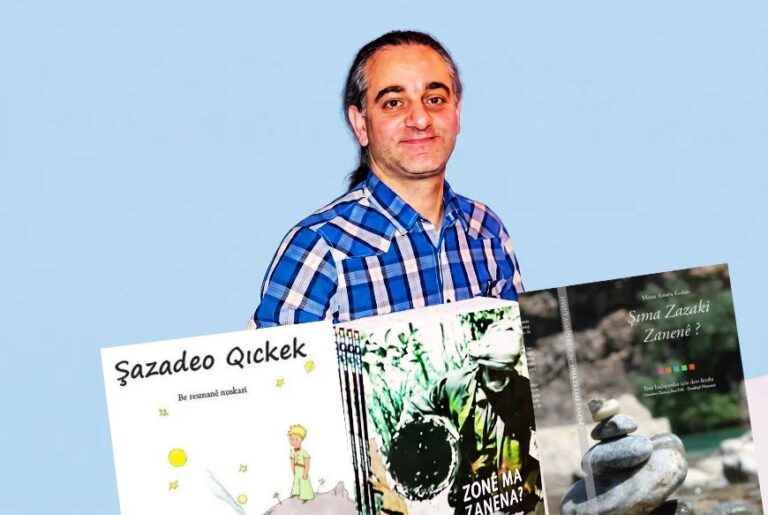
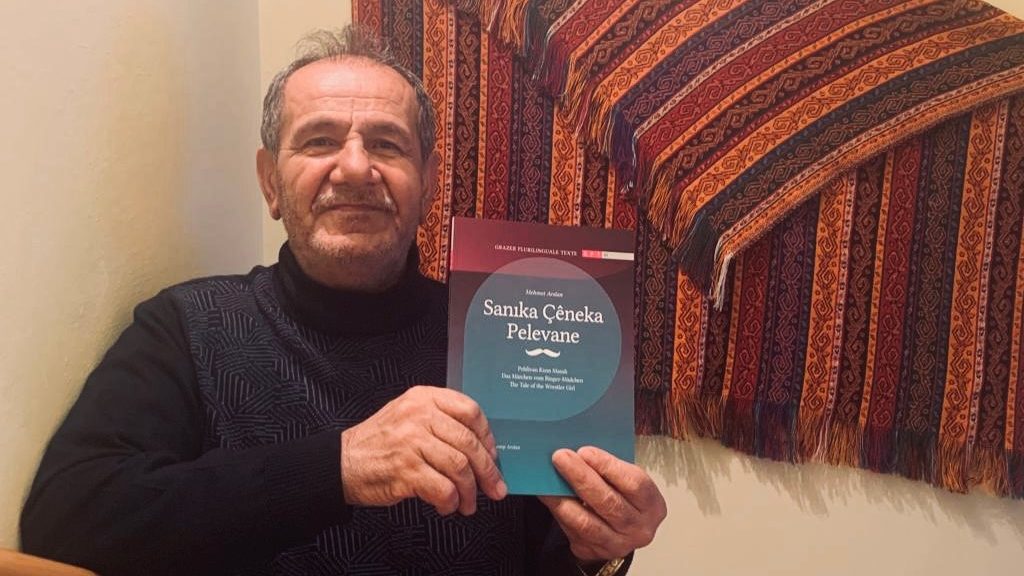
Afterwards we published the book Gulvang u İtiqatê Kırmancu (The prayers and beliefs of the Kırmancs) by Ali Dikme (Dikme, 2023). This work provides valuable insight into the belief system of Zaza-Kızılbaş-Alevism and was made available in multiple languages, including Zazaki, Turkish, English and German. This was followed by the publication of the illustrated fairy tale Sanıka Çêneka Pelevane (The tale of the wrestler girl; Arslan, 2021), narrated and transcribed for the first time by my father, Mehmet Arslan, whose dedication and meticulous efforts made this work possible. All of these books were printed in limited editions at treffpunkt sprachen (Center for languages), a center affiliated with the Institute of Linguistics at the University of Graz, located in the capital of the Austrian state of Styria.
Our last Zazaki project is again a written version of the second fairy tale with the illustrations that my father Mehmet Arslan remember from his childhood and was translated into German, Turkish and English. There are also one or two more beautiful fairy tales that he remembers, for instance, Bılbılo Zernên (The golden nightingale) or Dılaram Zengi/Dılara Mına Zengiye (My Dilara with blue eyes). Dılaram Zengi was apparently a very long tale that the storyteller of this version would recount for days on end during the winter months. The narrative was sometimes embellished with şüware, laments in the Zazaki language and water was splashed on the faces of those who had fallen asleep by the storyteller. Listening to this fairy tale feels like peering through a window into another world, another time. However, we have not yet been able to document and share these tales with our readers, as my father has unfortunately largely forgotten them over the years and can now recall only certain fragments. Here, once again, the advantages of a strong written tradition becomes evident.
Research on oral culture and oral history requires methodological approaches that are more specific than those employed in conventional research frameworks. At the same time, the feasibility of such projects depends to a considerable extent on the availability of adequate financial, institutional, and academic resources. The primary objective of such research is to engage with social memory, cultural codes, and internal dynamics in order to access forms of knowledge that cannot be adequately captured through established methodological standards. For this reason, research methodologies must be adapted to the specific historical and social conditions of the societies under study, with the aim of approaching forms of situated and context-sensitive knowledge production as closely as possible. From this perspective, I argue that the production of knowledge from an interdisciplinary and intersectional perspective requires the development of methods that are responsive to the structure and conditions of the society in question. Consequently, the development of intersubjective research methodologies and theoretical frameworks becomes essential, with the clear articulation of the researcher’s own positionality and perspective constituting a fundamental prerequisite.
The Zazaki-speaking community, particularly the Kızılbaş-Alevi Zaza community, is a group with a strong tradition of oral transmission and collective memory. Accordingly, the primary sources of knowledge are those who speak the language in its living form, the older generations, and those who, alongside the language, also carry on the belief systems and cultural practices. However, written sources are quite limited; those that do exist are often scattered and difficult to access. Although various efforts have been made to systematise and consolidate this field, the fact that existing research remains largely confined to established and dominant epistemological paradigms indicates that the field is still in an early stage of development. Against this background, it is necessary to conduct long-term, strategic and sustainable field research at a local level, provided that the required financial and institutional conditions are secured. In particular, it is important to undertake comprehensive studies that can analyse everyday practices, social memory, language use, belief systems and cultural transmission. Over time, the accumulation of such empirical findings may contribute to the establishment of a more systematic and coherent knowledge base for this field of study.
Although our group submitted such a project within the University, we did not receive the necessary attention and support at the outset. This is largely due to the fact that the field in question does not generate direct financial returns. While many academic studies today are funded in line with the priorities determined by the current system and the dynamics of supply and demand within academia, the Zaza language, which is at risk of extinction, remains excluded from these funding mechanisms. As a result, we have so far been able to benefit only from very limited cultural funding and small grants. As those who work in this field are well aware, it is neither easy to make profit from such work, nor is this the primary objective. It could even be argued that language-based forms of production, particularly in the field of music, foster creative motivation and opportunities to a certain extent, as they can offer relatively higher financial returns compared to other fields. Conversely, book-oriented projects tend to have a more limited long-term reach and impact within social contexts in which reading practices and engagement with written culture remain relatively underdeveloped.
In addition to the difficulties arising from various causes, the number of members of society who are proficient in the language and it’s cultural context is also steadily declining. As members of the current generation, we are doing our bit within the limits of our capabilities. To the extent that we succeed in harnessing the resources at our disposal and pushing their boundaries, we will continue to create new things and make our contribution in line with the goals we have set ourselves.
Democratic mass organisations can actually make significant contributions in this regard, but the current prevailing discourse and the various priorities at play there are not yet in a position to provide either a sufficient foundation or opportunities for academic and cultural work. Furthermore, the concerns of economically influential groups and business people of the society range from individual interests to political sensitivities; for this reason, we have not deemed it necessary to seek support from these quarters. In fact, ‘marginalized’ social groups can only survive through their own efforts and initiatives. Those in power and the ruling classes have no interest in keeping the social groups they have ‘marginalised’ alive, especially as their reasons for existence is based on the idea and discourse of ‘dissolving those they marginalised within themselves’.
My father Mehmet Arslan was born in the village, Bulmuş, which is the officially and Turkish replaced name for ‘Palanga’, which is the original Armenian name, in Tercan, the district of Erzincan in year 1957. The language that the villagers speak is Zazaki, and the belief and the tradition which they belong to is Kızılbaş-Alevism. They are the members of the tribe ‘Şıh Hasan’ that immigrated to the villages of Tercan from a place called ‘Paga Vesayi’ located between Pülümür and Ovacık in the province of Tunceli around 150 years ago. Their name has been handed down, in their own words, as belonging to the ‘Xıdıkan’/‘Xıdız’ tribe. The elders of the villages in this area speak of the Armenian lord ‘Pun’ and also lord ‘Alişan’ from Çarekan, who was regarded as Kurd; at that time, there was, even though it has been lived, still no awareness of the Zaza identity or language.
In the forewords to our previous books, we provided some information on the Zaza language. I would like to touch on this once again here. The Zazaki spoken by my father corresponds to the dialect of Tercan and its surrounding areas, which belongs to the Northeastern sub-dialect of Northern Zazaki. This variety is commonly referred to as ‘Kırmancki’. Village elders used the self-designation ‘Kırmanc’, thereby expressing their affiliation with the Kızılbaş-Alevi belief. In this context, ‘Kırmanc’ functioned as an inclusive term referring to those who shared the same confessional affiliation. Related expressions such as ‘Şarê Ma’ (“our people”) and ‘Şarê Kırmanciye’ (“people of Kırmanc”) were similarly employed to denote this collective –and, as we shall see later, overlapping multilayered– identity. They regarded those who shared this belief as part of their own community and used terms such as ‘Kırmanc’, ‘Şarê Ma’, ‘Şarê Kırmanciye’ and similar expressions to refer to them. In accordance with the Millet system, under which the Ottoman administration categorised, segregated and divided the population according to religious affiliation, people in the region referred to Sunni Turks as ‘Tırk’ and Sunni Kurds as ‘Khur’. The term ‘Khur’ can evoke negative and pejorative connotations, particularly in certain Sunni circles. However, the historical background to this designation lies in the social and political polarisation between the Kızılbaş-Alevi and Sunni communities, which became clearly apparent during the Ottoman period. Some critics of this term argue that the proper and correct term used by the local population for those who speak ‘Kurmanci’ –the Northern Kurdish, a language which will be discussed in more detail later in the text– is ‘Kırdaş’. According to some claims, certain Southern Zazaki-speaking communities use the self-designation ‘Kırd’, while referring to Kurdish-speaking groups as ‘Kurmanc’ or ‘Kırdaş’. Based on this interpretation, it is argued that they regard themselves as the ‘True Kurds’ and classify the communities they refer to as ‘Kurmanc’ or ‘Kırdaş” as ‘Kurd-like’ or ‘Kurdish-like’. It should be noted here that I have never personally encountered such interpretations of the terms ‘Kırdaş’ or ‘Kurmanc’ among Northern Zazaki-speaking Kızılbaş-Alevi communities. To this day, no one can explain why there is such a striking similarity between the terms ‘Kırmanc’ and ‘Kurmanc’, although, as described, there are countless theories, some of them politically motivated.
It is striking that the groups defined themselves in relation to one another and chose corresponding names for themselves. This points to a pronounced need for mutual differentiation and for signifying their own group affiliations. However, based on conversations with members of older generations, I have observed that, perhaps due to the effects of the state’s assimilation mechanisms to which the Alevi communities were subjected, particularly in recent decades, some elderly Northern Zaza-Kızılbaş-Alevis have come to define themselves as “True Turks”. It is conceivable that this discourse is fuelled, on the one hand, by the fact that many Alevi Pirs (spiritual leader) are of Turkish or Turkmen origin and that Alevi sayings, couplets and prayers are predominantly written and orally transmitted in Turkish, and, on the other hand, by the nation-state’s policies of Turkification during the Republican period.
To get back, the Kızılbaş-Alevi community, which refers to itself as ‘Kırmanc’, has, however, used the name ‘Kırdaş’ –a point which will be revisited later again in the text– to refer to Kızılbaş-Alevi who speak the language known as Kurmanci or Kırdaşki, and regards them as part of their –depends on how one interprets Alevism– own confessional or religous group, namely the Kırmanc/Şarê Kırmanciye, and refers to them as “Kurdish Kızılbaş-Alevis”.
The aim of these social groups, which from the Ottoman era to the Republic were constantly confronted with exclusion, oppression and violence on religious grounds, can be interpreted as an attempt to identify and define the Kızılbaş-Alevis whose language is not Turkish. When they encountered Zazas who spoke their own language but were not Kızılbaş-Alevis, –but Sunni-Hanafi or Sunni-Shafi’i– individuals with whom men who had most likely left the region in search of work had come into contact, they noted the shared language, but also the differences in belief and, consequently, in cultural practice. They referred to them as ‘Zaza’, in accordance with their own self-designation. On the other hand, they state that they were defined by the surrounding communities as ‘Kızılbaş’ and ‘Kurds’ within the dominant structure and context.[4]
Ultimately, the younger generations from these regions, many of whom belonged to economically disadvantaged segments of society and migrated to large urban centers, particularly from the 1960s onwards, often subordinated their ethnic and religious affiliations to the dominant political paradigms of the period. In some cases, these affiliations came to be perceived as remnants of a backward past and were consequently devalued, while greater importance was attached to class-based forms of political identification. Within this context, interpreting their social environment through conceptual frameworks shaped by the modernist assumptions of Kemalism, which had permeated virtually every political movement and structure that had emerged and developed in the country, they regarded the communities from which they had broken away primarily as feudal and reactionary.
In Turkey, in accordance with the official ideology, all people living in the ‘East’ who could not be defined as ‘Turkish’ were labelled ‘Kurdish’, which is why Zaza speakers were also counted among the Kurds. In Turkey, particularly during the formation of the Turkish nation-state, the notion of the ‘East’ was frequently constructed as a world to be integrated into the national project, and it functioned as a category through which regions and populations were represented in ways that reflected the colonial and orientalist assumptions prevalent at the time (Zeydanlıoğlu, 2008). People who had migrated from the East and could only communicate in urban areas under Turkey’s more restrictive and prohibitive conditions were unable to bring these differences to the fore due to the limited and constrained circumstances at that time. Within the European diaspora, however, this issue ultimately took on different developments.
In European countries governed by relatively liberal democracies, and particularly in the 1980s when postmodern discourse focused on identities based on ethnic-religious and ethnic beliefs, the interactions of migrant groups from Turkey have become increasingly open and unrestricted over time. At a time when the struggle for Kurdish national identity was reaching its peak, a process began to take shape as the speakers of Zazaki, who were referred to from the outside as ‘Kurds’, realised that they could not really communicate with speakers of the Kurmanci[5] dialect of the northern Kurdish language group, as we define it today, and began to grapple with this issue. As communication increased, the idea that ‘Zazaki is a distinct language’ began to take shape, an idea that had originally been brought to the fore by the efforts of volunteers who, however, lacked academic knowledge and expertise.
Work on the Zaza language then continued at an accelerated pace, and considerable progress has been made, particularly from the 1980s to the present day, in defining and classifying the language linguistically. According to historical records, scholarly research into the Zaza language began in 1856 and was carried out by Peter Lerch in St Petersburg in 1857. Peter Lerch’s work was based on information he obtained from captured soldiers, mainly from Palu and Bingöl, who had been taken prisoner by Russian troops during the Ottoman-Crimean War. In later years, the German archaeologist Albert von Le Coq and, in particular, the linguist Oskar Mann (between 1903 and 1907) collected material on Zazaki. On the basis of the data obtained from these sources, the language was given the exonym ‘Zazaki’ (Kanat, 2023). However, the communities that speak Zazaki in the region have their own specific self-designations, such as Dimili, Kırmancki or Kırdaşki.
Based on current researches, Zazaki can be classified into a number of dialect groups and regional varieties. Some linguistic atlas projects[6] distinguish between Dimilki as ‘Southern Zazaki’ and Kırmancki as the ‘Northern Zazaki’.[7] According to a number of field studies, Kırdaşki is classified as Central/Eastern Zazaki. This variety is primarily spoken by communities adhering to the Kızılbaş-Alevi belief and is located in a geographical transition zone characterised by intensive contact with Kurmanci-speaking populations. As a result of this linguistic contact, Kırdaşki is often perceived as phonologically closer to Kurmanci than other Zazaki varieties and is sometimes described by local speakers as ‘Kurdish-like”. At the same time, Kırdaşki-speaking Kızılbaş-Alevis generally remain at least partially or relatively better intelligible to the Zazaki-speaking Kızılbaş-Alevis. As noted earlier, these communities, which share the same belief, have employed colloquial expressions such as ‘Here-Were’ (“go-come”) to refer to Kırdaşki or Kurmanci spoken by the Kızılbaş-Alevis and ‘So-Bê’ (“go-come”) to refer to Kırmancki. [8] However, Southern Zazaki contains lexical elements that have entered through historical contact with neighbouring languages Kurmanci and Arabic, and to speakers of Northern Zazaki, Southern Zazaki sounds phonologically closer to these two languages. Consequently, Southern Zazaki, which initially sounds unfamiliar to speakers of Northern Zazaki, often becomes intelligible with sustained exposure. Since Northern Zazaki cannot be directly compared with Kurmanci, the reverse process does not necessarily appear to occur to the same extent. Based on my own observations, speakers of Southern Zazaki frequently appear to adapt more quickly to communication with Northern Zazaki speakers than vice versa.
Growing awareness within the European diaspora, particularly since the mid-1990s onwards, contributed to the renewed visibility of a significant cultural heritage. Musicians and researchers who had gone into exile following the 1980 military coup collected, documented, and disseminated numerous oral sources through fieldwork and archival research conducted in the historical region commonly associated with ‘Dersim’. As a result, a substantial body of narratives, memories, and cultural knowledge preserved by older generations became accessible to younger generations. Thanks to oral history projects[9], the stories of older generations have begun to be recorded and archived. These efforts have played an important role in preserving cultural traditions and forms of collective knowledge that were at risk of disappearance, and being forgotten, while also integrating them into the history of world culture. During the 1990s, members of the last generations who still spoke Zazaki as a living language increasingly began to share memories of the Dersim Genocide[10] of 1937–38, memories that had frequently remained unspoken for decades. In this sense, the revitalisation of language and the recovery of social memory developed as closely interconnected processes. The re-emergence of these suppressed memories also brought the social-scientific and psychosocial dimensions of the research to the fore in a more profound and significant way.[11]
A frequently cited saying, attributed to the sociolinguist Max Weinreich, states that “a language is a dialect with an army and a navy”. Although formulated in an ironic manner, the statement highlights an important sociolinguistic insight: the distinction between a language and a dialect is not determined solely by linguistic criteria. Rather, political power, state institutions, and processes of official recognition play a decisive role in determining which speech forms attain the status of a “language” and which are classified as “dialects”. This observation is particularly relevant in the context of Kurdistan, a historical region divided among four states and characterised by linguistic diversity. In the region defined as the ‘Middle East’ from an orientalist perspective, and likewise in other regions referred to as the ‘Global South’, analyses that fail to take these historical, political, and economic realities into account remain incomplete. From this perspective, the exclusive application of conceptual frameworks derived from the European nation-state model risks obscuring well-founded and inclusive outcomes under current conditions. This is because the historical development, social organisation, and political experiences of these communities have been shaped by different dynamics. Questions concerning how religious and ethnic communities position themselves within contemporary political and social contexts, particularly communities whose internal diversity cannot be adequately captured through monolithic categories and who possess historical, cultural and social characteristics that go beyond established, standardised and ‘objective’ parameters, constitute an important area of inquiry within postcolonial scholarship. Such approaches have the potential to generate interpretations that move beyond established conceptual frameworks and provide a more nuanced understanding of the societies and cultures of Kurdistan. At the same time, the geographical boundaries of Kurdistan remain the subject of ongoing historical and political debate. The ways in which these boundaries are defined, whether in relation to northern, southern, eastern, or western limits, are shaped not only by historical processes but also by contemporary political interests, competing territorial claims, and broader struggles over representation and influence. To return to the main subject, it should be emphasised once again that the region commonly referred to as “Kurdistan” is characterised by considerable linguistic diversity. Within this multilingual landscape, languages have been variously classified as dialects, varieties or accents, depending on the degree of historical differentiation and linguistic divergence attributed to them. Such classifications are not always determined exclusively by linguistic criteria, but are also shaped by historical and political factors.
The most widely spoken variety within the Kurdish language continuum is Kurmanci, which is commonly referred to as Northern Kurdish. Sorani is generally recognised as the principal variety of Central Kurdish, while Kelhuri is among the major varieties of Southern Kurdish. Kurdish is typically classified into three main language groups: Northern, Central and Southern Kurdish. These broad categories are further differentiated into a range of sub-dialects, peripheral and transitional varieties, as well as local speech forms. The decisive factor behind these distinctions is generally geographical and regional conditions. The social and cultural relationships that have developed between communities over the course of history have also shaped these differences. In regions where Southern Kurdish is spoken, for example, clear influences from Arabic and Modern Persian are evident due to geographical proximity and historical interaction.[12] To give another example, a significant proportion of speakers of Southern Kurdish varieties identify as Shia Muslims and/or adhere to the Ahl-e Haqq[13] faith, whereas speakers of Northern and Central Kurdish varieties are predominantly Sunni Muslims. More broadly, linguistic development has been shaped by a complex interplay of factors, including geographical boundaries, rural-urban divisions, mountain-plain distinctions, and religious and denominational affiliations. The interactions, overlaps, shared experiences, divisions, and occasional processes of social distancing that emerge from these conditions have all contributed, to varying degrees, to the formation and differentiation of linguistic varieties.
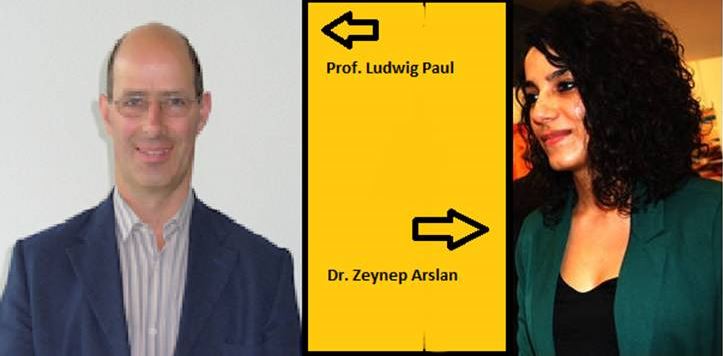
The status of the Zaza and Gorani/Hewrami languages has been the subject of debate in linguistic literature for some time. Opinions differ as to whether these languages are dialects of Kurdish or distinct languages belonging to the same language family as Kurdish. Whilst these languages are often viewed in a broader context of the ‘Kurdish language’ or ‘Kurdish identity’ from a cultural and socio-political perspective, it is also argued from the perspective of historical linguistics and etymology that they have undergone distinct developmental processes and represent independent linguistic branches. The Iranologist Ludwig Paul, for example, stated in an interview I conducted with him that Zazaki and Kurdish had diverged from one another in very ancient times, but had later converged again (Arslan, 2018 and Paul, 1998). Paul, who pointed out that political and geographical changes also played a significant role in this development, emphasises that Zazaki is quite similar to Kurmanci today; Kurmanci, in turn, bears a strong resemblance to Sorani; and Sorani, in turn, is quite similar to Persian. He had pointed out that the situation was different around a thousand years ago and that, at that time, there was a clear divide between ‘Proto-Zazaki’ and ‘Proto-Kurdish’. This theory was also confirmed by the Indo-Europeanist Heiner Eichner in an interview I conducted with him. Eichner said that if we were to place a fairy tale in Zazaki and one in Gorani side by side and read them in parallel, we would find that these two languages have more in common with each other than either of them has with Kurmanci. (Arslan, 2015).
On this basis, research has been conducted into Gorani and Zazaki as significant language groups within the Northwestern Iranian branch of the Indo-European languages; in this context, according to some theories, Gorani and Zazaki exhibit closer similarities than Kurmanci (ibid.). According to the Atlas of the Languages of Iran (see Atlas of the Languages of Iran), these two distinct language groups are not categorised as Kurdish, but are classified within the Iranian language family as ‘Kurdic languages’/‘Kurdic language groups’. Another influential project concerned with the classification and mapping of the world’s languages is Glottolog (see Glottolog). Here, within the classification of the Northwestern Iranian languages, the ‘Adhari/Azeri’ language group is mapped as a separate branch alongside the group referred to as ‘Laki-Kurdish’, without a distinct ‘Kurdic languages’ category being established alongside the other languages.[14] Within this framework, Zazaki is classified in the second category, defined as the ‘group of Old Azerbaijani languages’. The Western Iranian branch of the Indo-European language family is in turn divided into Western and Eastern subgroups. Zazaki and Gorani occupy the westernmost edge of the Western Iranian languages, whereas Modern Persian and Kurdish are considered to be the easternmost (see the genealogical tree of the Iranian languages).
There are differing views regarding the historical origins of Zazaki-speaking communities. One influential hypothesis proposes that their ancestors migrated several centuries ago from the historical region of ‘Deylam’, located on the southern shores of the Caspian Sea, and subsequently settled in the mountainous regions of Anatolia. According to this interpretation, some branches of these populations later expanded into lower-lying areas, where processes of religious and social transformation, including the adoption of Sunni Islam, took place. Within this broader framework, some scholars have argued that communities speaking what are today described as Zazaki-Gorani languages were historically connected to populations that remained in the Zagros Mountains and the Iran-Hewraman. From this perspective, cultural continuities in these areas have persisted to a certain extent. Due to their geographical isolation in mountainous regions, they have retained archaic linguistic features that have generally been lost in neighbouring languages.
On the other hand, there are also those who argue that the Kızılbaş-Alevi communities, particularly those inhabiting the historical region of Dersim, represent populations that have long been indigenous to the area rather than the descendants of later migrations. Proponents of this view emphasise the continuity of belief systems, cultural practices and social organisation in the region.
In fact, speakers of Zazaki and Gorani, whose languages have long been regarded as closely related, exhibit striking similarities and commonalities, particularly with regard to their beliefs and consequently at the sociological, socio-economic and socio-political levels. For example, while the section of the Gorani-speaking communities that remained in the mountains of present-day Iraq refers to its faith as ‘Kaka’i’, the section that remained in the mountains of present-day Iran calls it ‘Yarsanism’. As I have already mentioned, this faith, known as the Ahl-e Haqq faith, not as Shia Islam, is notable for its strong similarities with Anatolian Kızılbaş-Alevi belief system. It is important to examine in detail issues of belief and religious affiliation, rural and urban settlement patterns, historical and sociological dynamics, and their interactions, and to explore how all these factors are reflected in the language. Although the same factors also apply to the communities on the southern coast of the Caspian Sea, who speak the westernmost of the other Western Iranian languages, where links to the Ahl-e Haqq faith are also evident, recent studies suggest that these languages exhibit significant linguistic overlaps (in terms of grammar, phonology and writing systems; Gippert, 2008).
However, the language spoken by the Southern Zazaki speakers is perceived by the Northern Zazaki speakers as having been influenced by the Arabic-Islamic linguistic sphere in terms of phonology and pronunciation, and is therefore considered to be closer to it. The words they use reflect their worldview and their conception of humanity’s place in the universe, as well as their linguistic and cognitive patterns. Islam places humanity at the highest rank among all other beings and assigns it a superior and central position. The fact that this social group, which follows the Islamic teachings of the Hanafi and Shafi’i or Shia schools, has thoroughly integrated religious terms and expressions such as ‘Homa’, ‘Huma’, ‘Uma’, ‘Allah’ and similar phrases into their language clearly reflects their religious or (traditional) piety. The Zazaki-speaking Kızılbaş-Alevis use expressions such as ‘Heq’, which means ‘the Creation’; through this linguistic practice, they uphold the Kızılbaş-Alevi worldview and offer an insight into it.[15] Here, language itself is one of the fundamental factors underpinning the view that collective sociality is rooted in historical continuity and integrity.[16]
The loss of the language Zazaki indeed also signifies the loss of a source of knowledge and memory rooted in belief. The loss of the language leads to the loss of an authentic worldview, a worldview rooted in other times and places, in which the universe and all living beings are regarded as sacred as part of the cosmos, and in which one lives in a state of balance and interdependence with all living beings. For this reason, the Kızılbaş-Alevi belief system, which, for example, is preserved within the European diaspora by adapting to existing institutional frameworks, now faces difficulties in maintaining its original structure under new conditions, as it has become detached from its original geography and spatial context. Over time, this process leads to a certain loss of meaning and a sense of disconnection. As these places have become increasingly distant or effectively inaccessible, belief and cultural memory are being reconstructed to a growing extent through imagined, symbolic, and remembered forms of attachment. This situation can lead, particularly among younger generations, to the weakening or alteration of certain meanings, or to their reinterpretation in different ways, and ultimately resulting in a form of alienation; possibly in terms of its integration into established systems and the reproduction of their mechanisms (Arslan, 2016; Arslan, 2018a).
In summary, it can be said that some speakers of the Zazaki and Gorani languages also speak Kurdish and, due to centuries of geographical overlap and shared socio-religious identities, are generally considered part of the wider Kurdish cultural sphere. It should be noted that, in contrast to the Zazaki- and Gorani-speaking communities, which belong to the Ahl-e Haqq religious communities, the Zazaki- and Kurmanci-speaking Sunni communities have closer contact and interaction with one another; this difference is significant in terms of the intermingling and mutual influence of the languages. The polarisation between communities that form part of institutionalised and centralised orthodox structures in the region and those groups that lie outside or on the fringes of these structures is one of the key factors shaping the interplay between languages.
The controversial debates between Gorani and Kurmanci continue in academic circles in Iraq and Iranian Kurdistan, albeit not to the same extent as those concerning Zazaki and Kurmanci in Turkey. The long-standing research by scholars who argue that Zazaki is a distinct language can be summarised as having reached the following general conclusions[17]: In linguistics, when determining whether a language variant is a ‘dialect or a distinct language’, fundamental criteria such as phonology (the study of sounds), morphology (the study of structure), lexicology (the study of vocabulary), syntax (the study of sentence structure) and semantics (the study of meaning) are used. When these criteria are considered, Zazaki and Kurmanci, although both belong to the Western Iranian languages, exhibit marked structural differences in many aspects. The sound system and the rules of sound change (phonology) differ from one another. The word structure and inflectional system (morphology) also show considerable differences, particularly with regard to verb conjugations, the use of ergative constructions and personal endings. In terms of sentence structure and grammatical organisation (syntax), there are also clear differences in the formation of phrases, the use of auxiliary verbs and general word order. Although there are words that share a common Iranian origin in terms of their lexical composition (lexicology), there are significant differences in the core vocabulary. At the level of meaning (semantics), however, it can be observed that some words derived from the same root have taken on different meanings over time.
While these differing approaches continue to be debated, both Gorani and Zazaki are today recognised as distinct languages on linguistic maps within the field of international linguistics. Zazaki is classified as an independent language comprising a number of dialects, regional varieties, and local speech forms, while also exhibiting historical and structural affinities with other Iranian languages. At the same time, some scholars and commentators have advanced the notion of the Kurds as a multilingual nation. According to some commentators, however, the Zaza community is regarded as one of the groups most vulnerable to assimilation in terms of its ethnic identity. On the other hand, attempting to define a society’s national identity solely on linguistic criteria is not a sufficient or consistent method under current conditions. This is because traditional nation-state models are insufficient to explain more complex and multi-layered social structures, and are therefore forced to resort to various assimilation mechanisms in favour of monistic paradigms. Furthermore, there are historical examples that illustrate this; for instance, certain countries considered to be Turkic (Azerbaijan, Uzbekistan, Kazakhstan, Kyrgyzstan, Turkmenistan) possess their own distinct state identities and linguistic designations. The situation is similar in the case of the former Yugoslavia, where, despite a common Serbo-Croatian language, distinct national structures and linguistic designations emerged. As mentioned above, both Paul and Eichner stated that the fact that Zazaki is an independent language does not automatically prove the existence of an independent nation. However, they also strongly emphasised that classifying a language within a language family does not determine people’s ethnic identity. Numerous other examples could be cited. For this reason, it can be argued that a debate such as ‘Are the Zaza Kurds or not?’ has no solid basis, at least from an academic perspective. When we consider the history of humanity and the forms of social organisation, it becomes clear that pluralism, and not unitarism, is the natural state; by contrast, unitarist structures and formations are, in most cases, constructs that have emerged and become institutionalised under specific historical conditions. Viewed from this perspective, the debate is primarily shaped by political and economic factors. Therefore, the central question of the debate should perhaps be: is the aim to create a basis for harmony by defining dominant and secondary identities within a homogenising nation-state paradigm, or is it to create a pluralistic and democratic framework for coexistence that guarantees the existence and legitimacy of diverse identities?[18]
Numerous thinkers, writers and scholars have put forward differing views on nationality and nationalism. Generally speaking, belonging to a ‘nation’ or feeling a sense of belonging to a national identity is not merely a question of political affiliation, but is also linked to a shared sense of identity, a shared culture and a ‘spiritual unity’. From this perspective, the Kızılbaş-Alevis (Turks, Zazas and Kurds) occupy a unique position. While Turkish Kızılbaş-Alevis have at certain times found a place within the supremacist Turkish identity, over the centuries these communities have been subjected to diverse processes of assimilation due to their belief as well as historical, economic and political developments. For this reason, the identity of the Kızılbaş-Alevism is not merely a religious identity; historically, it has also manifested itself as an ‘ethnicised religious[19] identity’ (Arslan, 2018b). In other words, the structure discussed here involves more than just people of different ethnic origins who share a common belief. In regions where orthodox Islam predominates, these communities have often been marginalised and excluded, and over time have developed a distinct sense of identity in social, economic and political terms. Like the Kızılbaş-Alevis, Arab-Alevis, Yazidis and Druze, as well as other such communities that lie outside the central and dominant religious-political structures, have experienced similar historical and sociological conditions. They have generally been forced into economically and socially disadvantaged positions. Conversely, these communities, which have developed political awareness and a spirit of opposition and resistance over time, share significant commonalities shaped by both external and internal dynamics. The forms of division, unity and solidarity within these communities have emerged and taken shape under the influence of political circumstances and always within the context of these dynamics.
Consequently, these languages belong to the Iranian subgroup of the Indo-Iranian branch of the Indo-European language family and are specifically classified as Western and Northwestern Iranian languages. From this perspective, they are widely regarded as historically related languages. In Turkey, however, discussions concerning these languages and the identities associated with them have become considerably more politicised than in neighbouring countries. At the same time, it remains difficult to argue that these debates have reached a sufficient level of scholarly maturity or have become firmly grounded in a broadly established academic framework. It is also noteworthy comparable discussions concerning language and identity outside Turkey tend to remain more limited in scope and political significance. For example, some Gorani speakers living in Iranian Kurdistan and the border regions of Iraq (particularly in the Hewraman[20] region) maintain that their language is distinct from Kurmanci. However, in the absence of substantial political representation or organised institutional support, these claims have not acquired significant political influence (Sheyholislami, 2017).
These debates cannot be understood in isolation from the state structures and political contexts within which they unfold. In many countries, centralised, homogenising, and at times polarising models of governance have limited the development of more pluralistic and democratic forms of social organisation. When combined with postcolonial effects and the historical legacies of external intervention, these conditions can also impede societies’ ability to engage constructively with their own histories and identities. In a number of states whose borders emerged through imperial interventions and shifting geopolitical power relations, concerns about territorial “division” and “fragmentation” have often occupied a central place in state discourse. Such concerns often constrain the development of multi-ethnic and culturally diverse social formations. For this reason, debates on identity and belonging in the region known as the “Middle East” are constantly reignited and continue at various levels. This processes are shaped both by state policies and by competing claims to nationality and identity advanced by different social actors. In this context, assertions that certain political currents seek to subsume Zaza identity within a broader Kurdish framework, the responses such claims generate among segments of the Zaza population, and the interventions of official state ideologies may all be understood as part of the same conflicts over identity and discourse that recur at both macro- and micro-social levels.
The arena in which discussions concerning whether Zazaki should be regarded as a distinct language are currently taking place appears to have shifted largely from the European diaspora back to Turkey. While it is evident that certain actors have become more closely aligned with existing political and institutional centres of influence in this process, the significance and priorities attached to questions of linguistic classification and positioning must also be understood within the broader context of the country’s political developments. Debates about identity and belonging unfold against a backdrop of considerable volatility and intense political activity. At times such debates intensify, while at others they recede into the background; in the process, new alliances and divisions may emerge among different social groups. Under these conditions, the practical task of strengthening the language itself, not merely through debates about its status, but through its active use and preservation, often risks being relegated to a secondary concern.
One issue that deserves particular attention is the limited participation of women in these debates and their insufficient representation in decision-making processes. Discussions continue to take place largely within circles dominated by middle-aged and older men. However, observations from the field suggest that women, particularly in rural areas and in communities with limited contact with urban centres, play a central role in preserving and transmitting the language in its everyday, vernacular and traditional forms.[21] Research in anthropology and cultural studies has likewise highlighted the importance of women in the intergenerational transmission of cultural memory and traditional knowledge. Many of those committed to preserving this heritage and preventing the further erosion of the language continue to conduct fieldwork, make recordings, build archives, and transcribe oral materials, often relying primarily on their own resources and expertise. In recent years, social media has also emerged as an important platform through which these discussions are sustained and disseminated. However, the priorities and directions of such work are frequently shaped by the social and academic positions of those who lead it. Where insufficient attention is paid to the gendered dimensions of knowledge production, the contributions of women may remain underrepresented or overlooked. This not only limits the scope of existing research but also risks the loss of valuable forms of cultural memory and knowledge that are essential for a more comprehensive understanding of the society in question.
Gender studies was only recognised as a distinct discipline within the social sciences in the final quarter of the twentieth century, following a long struggle within the fields of literary studies and psychology. An important theoretical foundation of this field lies in deconstructivist approaches, which build on structuralist and poststructuralist ideas concerning the ‘linguistic construction of social reality’. From this perspective, language and social perception are understood as being in a continuous process of mutual constitution. Language both reflects and shapes the ways in which individuals perceive, interpret, and conceptualise the world. It is therefore not merely a descriptive system, but also a productive force in the formation of social meaning. Historical examples illustrate how such processes operate. In eighteenth-century Europe, for instance, the marginalisation of women was accompanied by reinterpretations of classical thought of Aristotle and Plato. Within these frameworks, women were often positioned as complementary to men, and such hierarchies were also reproduced in linguistic practices. In this sense, masculinised forms of language contributed to the invisibility of women, while linguistic structures often lacked corresponding feminine forms of expression in many domains of public discourse. Similarly, racism has fed on notions that were regarded as immutable and ‘natural’. No one other than the white man was accepted as a subject in historical narratives, and a perception of reality was constructed accordingly.
Since the mid-twentieth century, an important concern within historical writing and language-related research has been the need to make visible the voices of groups that have historically been silenced. Within this context, postcolonial and related studies seek to foreground the experiences of subalternised communities. The unique reflection of the beliefs, culture and way of life of Zazaki-speaking communities in the language is significant in this regard. Its preservation is therefore closely linked not only to linguistic continuity but also to recognition. The geographical and social contexts in which Kızılbaş-Alevi communities live, as well as the connections forged with these spaces, are also reflected in language use. In this sense, differences in worldview and social interpretation may be observed between speakers who identify with Kızılbaş-Alevi traditions and those whose linguistic and cultural orientations are shaped by Sunni-Islamic contexts. From this perspective, making a language visible also implies engaging with the historical and cultural worlds it encodes. Otherwise, processes of standardisation and centralisation may lead to cultural erosion and ultimately to the disappearance of the non-Turkish Kızılbaş-Alevi (Kırmanc) world.
Taking all these aspects into account, the question of belonging cannot be reduced to language competence alone. Individuals may identify with an ethnic identity through other factors, including emotional or psychosocial ties, even in cases where they do not speak the language in question. This is a complex and multidimensional issue that requires an interdisciplinary research framework and should be approached from intersectional, socio-economic and socio-political perspectives, rather than being reduced to purely political or categorical classifications.
In the village of my father, there are ongoing debates, particularly among the younger generations, regarding the categorisation and definition of the Zaza language. While some individuals identify as Kurds and/or Zazas, others emphasise affiliation with the Kızılbaş-Alevi religious community. A further group prioritises political identity, and the villagers are divided between the pro-Kurdish DEM party (as it is now known) and the founding party of the Turkish state, CHP. Based on our observations, generations born before the 1960s tend to place greater emphasis on their Kızılbaş-Alevi religious identity and on the longed-for secular character of the state, often expressing loyalty to the Turkish nation as a superordinate political identity or, more precisely, to the idea of institutional structure of the Republic and its democratic model of governance. By contrast, younger generations, particularly those born after the 1990s[22], are more likely to articulate ethnic identity in more explicit terms and to emphasise various facets of their identity. These dynamics should also be considered within the context of the country’s political climate. In this sense, considerations of religious and denominational affiliation remain salient in shaping social relations and perceptions of coexistence, and continue to be a point of negotiation across generations. This is a significant issue in terms of the intergenerational transmission of knowledge and memory for those belonging to social groups considered ‘heretics’ or ‘deserving of death’ in countries where Islam is dominant.The most striking and pressing examples of this are evident today in Syria, particularly in the recent plight of the Arab-Alevis/Alawis.
One observation that merits consideration is that Alevis living in the European diaspora tend to be relatively more sensitive about their religious identity and the memory of the ‘Alevi pogroms’ in Turkey, compared to Alevis living side by side with Sunni communities in Turkey’s major cities. This may also be linked to their living conditions and circumstances. Furthermore, unlike in Turkey, Alevis in the diaspora are not forced to share a permanent and compulsory living space with the Sunni community. Consequently, daily contact between the two communities in the diaspora is likely to be more limited and voluntary. This situation may also lead Kızılbaş-Alevi communities in the diaspora to occasionally adopt a more inward-looking way of life. Research into migration shows that diaspora communities tend to be more conservative and for various reasons form more homogeneous groups. It may therefore be useful to assess their approaches to, and their distance from, coexistence with Sunni (Turkish, Kurdish, Zaza) communities largely within the context of these social conditions.
To conclude, I would like to return to an important observation arising from our experience of producing multilingual and illustrated books in Zazaki. One aspect that has repeatedly attracted our attention is the extent to which speakers of Northern Zazaki are influenced by Standard Turkish, which they only learnt later, when attempting to standardise the language. Since literacy and familiarity with standardised written forms have, in most cases, been acquired through Turkish, the conventions associated with Turkish often shape perceptions of how a written language should be structured. As a result, sentence structures, orthographic preferences and broader processes of codification are frequently influenced by models derived from Turkish.
In our research into the Zaza language, we were particularly struck by the processes of linguistic change. In the course of translating texts, we encountered numerous examples that revealed how speakers draw upon different linguistic resources when explaining concepts. These observations once again highlighted the dynamic nature of languages as living social formations, demonstrating their capacity for variation, adaptation, and continuous transformation in response to changing social and environmental conditions. Migration, exile, political transformations, historical developments, and socio-economic mobility have all contributed to shaping the linguistic and cultural characteristics of the communities concerned. Consequently, significant similarities and differences in language use can be observed not only between neighbouring regions and villages, but sometimes even between families living within the same locality. Languages continuously influence one another; they converge, diverge, and evolve over time.
The concept of the ‘language repertoire’, which emerged in linguistic research during the 1960s, highlights the fact that language users do not rely on a single, fixed linguistic code. Instead, they select from a range of linguistic resources and communicative strategies depending on the context, social setting, and purpose of communication. The central point of this approach is that languages are not static, but dynamic and evolving systems.
As readers leaf through our published Zazaki fairy-tale books, scenes from the commercial Turkish-language film industry ‘Yeşilçam’ may readily come to mind, particularly for generations who grew up before the 1980s. The cinematic adaptations of the ‘Keloğlan’ fairy tales, for instance, have become deeply ingrained in our memories. In our latest fairy tale, Sanıka Lazekê Nêçari (The tale of Nêçar’s son), the central theme, just as in our previously published work Sanıka Çêneka Pelevane (The tale of the wrestler girl), is the mutual balance between people, nature and animals. While the stories convey the shared cultural heritage of the people through characters unique to the region, such as ‘Aksakallı Dede’ (wise old man), they also imbue nature, animals and the universe with a spirit, a voice and a vitality. At the same time, the stories also reflect the moral values and social norms that are important within local communities. Core values such as solidarity, communal life, mutual aid, honesty, and sharing form an essential part of these narratives. In this sense, given that they were passed down orally in the 1960s by my late grandfather Zeynel Arslan (1926–1982), they offer an insight into the social norms and worldview of that period. When one considers the capitalist order, which at times tends towards increasingly imperial tendencies, together with its relations of production and social organisation, the intellectual tradition of Kızılbaş-Alevism, whose broad contours are outlined here, retains its oppositional stance and its potential to open up alternative perspectives and, in this sense, perhaps even to function as a driving force (Arslan, 2018a).
This fairy tale, comprising seven chapters, was transcribed word for word from the oral narrative. It then underwent several rounds of revision and editing before taking its final form. Particular attention was paid to the written language to ensure that the sounds produced in speech were reproduced as accurately as possible in the written text, followed by their correct pronunciation.
A standardised written form of Zazaki still remains a distant goal, and the collective principle articulated by language advocates in the 1980s continues to apply: “Everyone should try to write the language as closely as possible to their own pronunciation and dialect.” At this point, it is important to emphasise that this concerns not the standardisation of a written language in the strict sense, but rather the ‘transcription of spoken language’. As in our other works, we have endeavoured to translate as literally as possible; however, a more flexible approach has been necessary, particularly in the German and English translations. Our aim was once again to understand, or to make understandable, the world of language and how it works, as well as the ways in which speakers perceive, conceptualise and communicate time, space, and the world in which they live. As several academic studies have shown, the process of learning a new language often involves interpreting it through the structural framework of a previously acquired language. In this process, learners tend to decode and understand new linguistic systems by comparing them with existing cognitive and linguistic schemata. For this reason, children who grow up in predominantly Turkish-speaking households, for example, and whose linguistic cognition is shaped accordingly, may sometimes encounter difficulties in acquiring a second or third language such as German. This is due to the simultaneous interaction of different linguistic systems, grammatical structures, and patterns of thought.
Children growing up in the European diaspora, in particular, have to switch between the language spoken at home and the language of instruction, as well as between everyday spoken language and standard written language. Furthermore, if one does not have a sufficient command of either of the standard languages, the process of learning a new standard language can prove to be more complex and challenging.[23] This situation presents one of the greatest challenges, particularly in research into languages that are endangered or at risk of extinction. For every society interprets and expresses the geography, the time and the social experiences in which it lives through its own language. The language, in turn, bears the traces of this world. On the other hand, German and Turkish are languages that are more developed and institutionalised in terms of generating and conveying the concepts of the modern world. In contrast, languages such as Zazaki, which have long existed within an oral culture and have not been sufficiently institutionalised, may face greater difficulties in conveying concepts of the modern world and translating them.[24]
At least the Zaza language, as it is known today, was last spoken in the villages during the 1960s, shaped by the social and historical conditions of that period, and has since been transmitted by speakers up to the present day. In contemporary circumstances, its social functions are limited, and within the broader socio-political context it may be regarded primarily as an ethno-cultural resource and as part of intangible cultural heritage. The last generation to have acquired or used the language in a fully lived everyday context consists of those who spent their childhood and youth in these villages. In this sense, the language appears to be closely linked to a specific historical period, as if anchored in that socio-historical context. Insofar as the language spoken by younger generations fails to find a political and economic function, processes of gradual weakening may occur. At the same time, this does not preclude forms of identification with Zaza identity at political or emotional levels, nor a broader sense of cultural belonging among younger generations.
In conlusion and to finalise, our books are the result of the dedicated work of a team. First and foremost, I would like to express my sincere gratitude to my father, Mehmet Arslan, for transmitting these fairy tales and for having recorded them in written form for the first time. His generation represents the last to have had a substantial command of this language. From this perspective, the transmission of what is likely the final layer of knowledge preserved in his memory carries particular significance. I would also like to extend my sincere appreciation to Hawar Tornêcengi, who has devoted much of his life to the preservation and development of the language and has made sustained contributions to our work. He has consistently supported us with patience and commitment, playing an important role in the realisation of this project. My gratitude also goes to Ali Dikme, whose encouragement prompted me to engage more deeply with the Zaza language and to contribute to research in this field. My esteemed mentor, the sociolinguist Dieter Halwachs, and his research team have once again provided generous support, which has been essential to the completion of our projects. We would like to express our heartfelt thanks to them. May God grant them all a long and healthy life.
We feel it is our duty to express our respect and gratitude to all those who, particularly from the 1980s to the present day, have in some way contributed to raising awareness of the Zaza language and bringing it to the fore. We see ourselves as a continuation of this process and wish to be recognised as such.
The idea of producing illustrated editions of the works our publications was warmly received at the University of Graz/centre of treffpunkt sprachen, and we were pleased to involve colleagues from the field of fine arts in this initiative. The illustrations for the fairy tale “Sanıka Çêneka Pelevane” were created by our dear friend Semra Bulut, while those for “Sanıka Lazekê Nêçari” and “Gulvang u İtiqatê Kırmancu” were prepared by our dear friend Nur Tunç. We are sincerely grateful to both artists for their valuable contributions. Finally, we extend our warm regards and appreciation to Mirzali Zazaoğlu, Aysel Çelik, Serdar Erdost, Cemal Atila, and all others, who have supported this project in various ways. Their contributions have all been meaningful.
To conclude, I would like to add one final note. We have made the books published to date available in digital form as part of an Open Access initiative. This means that all interested readers can access and download these works online free of charge (see Bibliography). We hope that, through this initiative, the works we have completed with great dedication and commitment will reach a wider audience.
We hope that this fairy tale and our other works will contribute to the world’s cultural heritage, as well as to the spiritual values and the existence of the language and its speakers.
We hope that this resource will provide further insight into the histories of the civilisations and peoples that emerged and subsequently disappeared across the regions of the Middle East, ancient Mesopotamia, and Anatolia; to be fair, let’s call it West Asia.
With the hope that it will bring joy to adults, young people, and children alike as they read, share, interpret, and discuss it in different ways, I would like to conclude this essay with an old proverb:
| Her vas koka xo ser rewêno Her theyr zonê xo de waneno Uyo ke aslê xo inkar keno Toz erzeno rêça xo sono | Every plant grows upon its own root Every bird sings in its own tongue Whoever denies their own origin Leaves by casting dust over the traces of their being |
Reference List:
Arslan, Z. (2026). Kimliklerin Kesiştiği Yerde Zazalar | Dr. Zeynem Arslan ile Röportaj. In: Zaza Kültür Merkezi, https://zazakulturmerkezi.com.tr/zeynemarslan-zazaca-zazalar-aleviler [11.08.2026]
Arslan, M. (2026). Sanıka Lazekê Nêçari. Arslan, Z. ed. GPT 04. Graz: pluripen.github.io. Open Access PDF-Link: forthcoming here: https://pluripen.github.io/#/publikationen/GPT
Dikme, A. (2023). Gulvang u İtiqatê Kırmancu. In: Z. Arslan (eds.). GPT 03. Graz: treffpunkt sprachen. Open Access PDF-Link: https://pluripen.github.io/assets/GPT/GPT_03/GPT_03_text.pdf
Arslan, M. (2021). Sanıka Çêneka Pelevane. In: Z. Arslan (eds.). GPT 01. Graz: treffpunkt sprachen. Open Access PDF-Link: https://pluripen.github.io/assets/GPT/GPT_01/GPT_01_text.pdf
Arslan, Z. (24.04.2018). İranolog Ludwig Paul ile Zaza dili ile ilgili söyleşi, https://www.zeynem arslan.com/iranolog-prof-dr-ludwig-paul-ile-zaza-dili-ile-ilgili-soeylesi/ [16.05.2026]
Arslan, Z. (2018a). Aydınlanmadan Demokratikleşmeye. Alevi Kadınlarının Aydınlanmasından Demokratik Alevi Toplumlarına. London: Transnational Press, TPL.
Arslan, Z. (2018a). Demokratisierung durch Selbstermächtigung. Zum Empowerment Alevitischer Frauen* in der Türkei und in der Diaspora. Baden-Baden: Tectum Verlag.
Arslan, Z. (2018b). Das multiethnische Dersim und die “Zaza-Identität” (Tr. Dersim’in çoklu etnisitesi ve “Zaza-Kimliği”. In: Wiener Jahrbuch für Kurdische Studien, 6. Dersim 1938. Genozid, Vertreibung und die Folgen: Achtzig Jahre danach. Z. Arslan et al. ed. pp. 169-196. https://www.zeynemarslan.com/das-multiethnische-dersim-und-die-zaza-identitaet/ [12.9.2025]
Arslan, Z. (ed.) (2017a). Zazaki – yesterday, today and tomorrow. Survival and standardization of a threatened language. GPS 04. Graz: treffpunkt sprachen. Open Access PDF-Link: https://pluripen.github.io/as sets/GPS/GPS_04/GPS_04_text.pdf
Arslan, Z. (ed.) (2017b). Zazaca – Dünü, Bugünü ve Yarını. Yok olma tehlikesi altında olan bir dilin yaşatılması, geliştirilmesi ve standartlaşması. GPS 05. Graz: treffpunkt sprachen. Open Access PDF-Link: https://pluripen.github.io/assets/GPS/GPS_05/GPS _05_text.pdf
Arslan, Z. (2016). Eine religiöse Ethnie mit Multi-Identitäten. Die europäisch-anatolischen Alevit*innen auf dem Weg zur Institutionalisierung ihres Glaubenssystems. Wien: LIT, Religionswissenschaft.
Atlas of the Languages of Iran: https://www.iranatlas.net/index.html?module=module.classifi cati%20on [12.9.2025]
bianet.org (22.02.2008; son gnc. 31.10.2013). Türkiye’nin Dilleri: https://bianet.org/haber/tur kiye-nin-dilleri-105115 [17.04.2026]
gazeteduvar.com (21.02.2019). 21 Şubat Dünya Anadili Günü: Türkiye’de 39 dil konuşuluyor: https://www.gazeteduvar.com.tr/gundem/2019/02/21/21-subat-dunya-anadil-gunu-turkiyede-39-dil-konusuluyor [17.04.2026]
Genealogical tree of Iranian languages: https://titus.uni-frankfurt.de/didact/idg/iran/iranstam. htm [20.05.2026]
Gippert J. (2008). Zur dialektalen Stellung des Zazaki. In: Die Sprache 47/1, 2007/2008, 77–107: https://titus.uni-frankfurt.de/personal/jg/pdf/jg2008e.pdf [19.05.2026]
Glottolog: https://glottolog.org/resource/languoid/id/nort3177 [15.04.2026]
Kanat, Y. (2024). Batı Kaynaklarında Zazalar ve Zazaca. İstanbul: Vir Yayınları
Karim, S. O.; Gholami, S. Gorani in its historical and linguistic context. Gorani in its Historical and Linguistic Context, (eds.) S. O. Karim, S. Gholami, Berlin, Boston: De Gruyter Mouton, 2024, pp. 1-42. https://doi.org/10.1515/9783111168852-001
Paul L. (1998). The Position of Zazaki Among West Iranian languages: https://www.azargoshnasp.net/languages/ zazaki/zazakipositionof.pdf
Sadjadi, M. (2020). Gorani, Hawrami, and Kurdish: A Linguistic Investigation in Reply to Chamanara (1390) and Bamshadi et al (1393, 1394, 1395, 1396). In: Tarbiat Moares University: Language Related Research, Vol.11 No. 4. September, October, November 2020. file:///C:/Users/lanbsbarz/Downloads/135820205813.pdf [12.9.2025]
Zeydanlıoğlu, W. (2008). The White Turkish Man’s Burden: Orientalism, Kemalism and the Kurds in Turkey. Newcastle: Cambridge Scholars Publishing. https://www.academia.edu/220 4693/_The_White_Turkish_Man_s_Burden_Orientalism_Ke malism_and_the_Kurds_in_Tur key [18.05.2026]
[*] Also written: Qizilbash or Kizilbash; original in Turkish: Kızılbaş. An attempt at a brief definition: The origin of the name dates back to the 15th century and the Safavid dynasty under Shah Ismail. This movement emerged from the transformation of the Safaviyya Order and the convergence of various Sufi, dervish, and messianic currents. The movement developed against the backdrop of the Ottoman-Safavid rivalry. This rivalry contributed to the persecution and marginalization of the Kızılbaş communities within the Ottoman Empire, while in Safavid Iran, Kızılbaş identity was gradually absorbed into Twelver Shiism. In Anatolia and Mesopotamia, however, these communities preserved their own distinct religious practices and communal structures. Arslan, Z. (2016)
[1] The first comprehensive academic event organised in Turkey on the Zaza language was the ‘1st International Symposium on the Zaza Language’, held by Bingöl University on 13–14 May 2011.
[2] See the conference 2015, Vienna: Zazaki – yesterday, today and tomorrow: Survival and standardization of a threatened language: https://www.zeynemarslan.com/zur-aufrechterhaltung-und-standardisierung-einer-bedrohten-sprache/ [9.9.2025]
[3] We would like to thank to our associates for their contributions to our conference and conference books.
[4] These communities, referred to as ‘Kızılbaş’ and ‘Kurds’, were subjected to various forms of exclusion and repression. In response, many developed oppositional political positions and practices of resistance. Within the framework of official ideology, they were also labelled “communists”. This process of multiple stigmatisation, encapsulated in expressions such as “Alevi-Kurdish-Communists” and, in some accounts, the shorthand “3K”, reached its peak with the genocide known within the community as the “Dersim Genocide” of 1937–38.
[5] This issue will be discussed in more detail later in the essay; in short, Kurmanci itself is divided into dialects and variants. Kurdish can be broadly divided into the following categories: Northern Kurdish (primarily ‘Kurmanci’), Central Kurdish (primarily ‘Sorani’) and Southern Kurdish (primarily ‘Kelhuri’). As will be elaborated later, Kurdish is a rich and ancient language with further nuances and sub-varieties.
[6] Language atlases are dynamic projects that have been evolving for over a century, with the aim of documenting the geographical, structural and genetic diversity of the world’s languages. The tradition of scientific mapping in this field began with the French Language Atlas of 1902 (ALF; see https://lig-tdcge.imag.fr/cartodialect5/#/), which is regarded as the foundation of modern dialectology, and took on a global dimension with the establishment of the Ethnologue database in 1951 (see http://ethnologue.com/), which today lists over 7,000 languages. Over time, the preservation and structural analysis of languages have come to the fore; in this context, the UNESCO Atlas of the World’s Languages in Danger was published in 1996 (see 2010, full text: https://unesdoc.unesco.org/ark:/48223/ pf0000187026), WALS (see https://wals.info/), which maps the grammatical structures of languages, in 2005, and the ASJP (see https://asjp.clld.org/), which performs algorithmic word comparisons, in 2008. More recently, local and digitally oriented initiatives have gained momentum, leading to the launch in 2009 of the Iranian Language Atlas (ALI; see https://www.iranatlas.net/index.html) and regional dialect maps, as well as the digital platform Glottolog (see https://glottolog.org/) in 2011, which lists global language family trees.
[7] In my view, the most comprehensive, original and up-to-date studies on this subject are those published by the Frankfurt Zaza Language Institute (see https://zazaki-institut.de/). In their framework, the Zaza language is divided into three main dialects: Southern Zaza, Central/Eastern Zaza and Northern Zaza. These are in turn subdivided into ‘peripheral’ and ‘transitional dialects’.
[8] The older generations of these Kızılbaş-Alevi communities, who refer to their own language as ‘zonê ma’ (our language), do not seem to have felt the need for a specific term. Although these circumstances are understandable given their historical and sociological context, they pose a problem in today’s world and make it even more difficult to classify this community and its language, which is based exclusively on oral tradition, within established categories and discourses.
[9] Finally, as part of the ‘Oral History’ project in Germany, in collaboration with the ‘Dersim Culture and History Centre’ (De. Dersim Kultur- und Geschichtszentrum e.V.), the transcripts of the interviews conducted between 2008 and 2012 with the last surviving eyewitnesses to the massacre in Dersim in 1937/38, along with their subsequent editing and translation, were finally made available digitally to the public and interested audiences on 21 and 22 May 2026. See https://www.oral-history.digital/news/20 26-05-21-dersim.html [19 May 2026].
[10] “Dersim is a scab; it must be cleaned, removed and discarded” or similar expressions are part of the rhetoric of assimilation and suppression policies employed by state officials in the pre-Republican and early Republican periods. This perspective is generally found in reports from the Ottoman period and bureaucratic documents from the early Republican era. The intention to exterminate a group is a central element in the definitions of genocide. In some academic works and political arguments, state assimilation mechanisms, which aim to alter and absorb places of residence, places of worship and pilgrimage, language and culture, are interpreted as ongoing attempts at erasure.
[11] The term ‘emotional heritage’ refers to the invisible psychological, cultural and social imprints that are passed down from generation to generation or through social experiences. This term is used in interdisciplinary fields such as psychology, sociology, architecture and cultural studies. See also “transgenerational trauma”, which refers to emotional and psychological wounds arising from ancestors’ unprocessed experiences of violence, war or displacement, and which are unconsciously passed on to subsequent generations. This transmission does not occur genetically, but through behavioural patterns, epigenetic traces and communication within the family (e.g. through silence).
[12] See also The far-reaching implications of written language: the differences between the Arabic and Latin alphabets and their consequences for language use.
[13] Also known as: “Raa Haq” or “Reya Heq”. To put it very simply: The “Ahl al-Sunnah” communities follow the path laid down by the Holy Quran and the Sunnah (Hadith and Fiqh). In contrast, the “Ahl-e Haqq” or “Ehl-i Hak” communities seek the “Creator” or “The Creation”/The Existance and believe in the existence of this Being in all that exists (Wahdat al-Mawjud) and in its manifestation in creation (Wahdat al-Wujud). They place greater value on the inner (esoteric) meaning than on outward appearance.
[14] Following the signing of the ‘Treaty of Turkmenchay’ in 1828, the territory of historic Azerbaijan was divided into two separate regions. While the northern part of the region (now the Republic of Azerbaijan) came under Russian rule, the southern part (northwestern Iran) remained under the administration of the Qajar Dynasty. South Azerbaijan is bordered to the north by the Arax River, to the east by the Caspian Sea and the Talish Mountains, and to the west by the borders with Turkey and Iraq. Tabriz, Ardabil and Urmia are among the region’s most significant historical cities.
[15] An examination of the historical, political and sociological influences of the Islamic faith, as well as the impact of reactionary and patriarchal tendencies reflected within Alevi society, and the associated changes and transformations, would go beyond the scope of this work in this essay and fail to fulfil its intended purpose. I recommend my earlier works to interested readers. However, for readers interested in the Alevi belief system and Alevi thought in general, as well as for those who wish to explore the subject in greater depth, I would like to draw attention here to the following key terms: ‘Wahdat al-Wujud’ (Unity of Being) and ‘Wahdat al-Mawjud’ (Unity of Existence).
[16] In the language of the Kırdaşki-speaking Kızılbaş-Alevi, there are different interpretations of this term. When they say ‘Homa’, in some cases they are invoking God. An analysis from the perspective of intersectionality leads to more precise conclusions. Indeed, belief continues to exert a significant influence, which is reflected in the language.
[17] See Eren, H., Facebook post: “A linguistic assessment of the debates on the similarities between Zazaki and Kurmanci”, 13 February 2026.
[18] I last shared my more detailed views on this subject in an interview. (Arslan, 2026)
[19] In the German-speaking context of the sociology of religion, a distinction can be made between “religion” and “faith”. I deliberately distinguish between religion and faith. While I understand religion to be a more institutionalized, organizationally established form of faith that is formalized in doctrine and practice, I use the term “faith” to refer to forms of religious or spiritual affiliation that do not necessarily have comparable institutional structures, binding dogmas, or standardized practices. In this sense, I do not view Alevism as an institutionalized religion, but rather as a faith tradition and faith community that has developed historically. For this reason, I deliberately use the term “ethnicized faith community” in German. Translating this into English, however, is difficult, since the conceptual distinction between “Religion” and “Glauben” that exists in German cannot be directly rendered by the distinction between “religion” and “faith,” and, in particular, “faith society” is not an established academic term. “Ethnicized” simultaneously indicates that this affiliation with a faith is linked to ethnic attributions and boundary-drawing in social and political processes. In Turkish, there are the terms “inanç toplumu” (faith community) and “dini toplum” (religious community), but based on my observations, these terms are used interchangeably, and there is no deliberate distinction or classification between them.
[20] Some linguists classify Hewrami as a sub-variety of Gorani (see Karami, S. and Gholami, S. (eds.) (2024): 45–95). Others regard Gorani and Hewrami as distinct languages (see Sadhadi, M. (2020)).
[21] The concept of the ‘locus continuum’ is used particularly in social and cultural anthropological research to illustrate the idea that women, as ‘bearers of culture’, play a constant role in cultural transmission. Margaret Mead’s work ‘In Coming of Age in Samoa’ (1928) is cited as the source of this idea. Mead emphasises that in many cultures (let us refer to this as the existing social fabric and conditions), women assume primary responsibilities, particularly in the upbringing of children, and thus play a crucial and cyclical role in the transmission of culture, tradition and knowledge to the next generation.
[22] The 1990s in Turkey were marked by intensified fighting against the Kurdish PKK and the evacuation of an estimated 4,000 villages in the east of the country, as well as a growing awareness of the Alevi faith following the massacre in Madımak in 1993. It can also be said that, since the 1990s, the influence of religious foundations and associations in Turkey has grown in the social, economic and political spheres. The key factors shaping this process of growth and change are as follows: political participation, capital accumulation, the establishment of media and publishing organisations, the establishment of student halls of residence and training centres, and above all social welfare networks, etc.
[23] The national political debate has a direct impact on the level of inclusion and the ability to create equal opportunities within education systems, given an increasingly diverse social structure. Although German is a far more demanding language than English, which is a global language, language policy-shaped by conservative national politics-continues to have an exclusionary rather than an inclusive effect. In education systems that follow a monolingual policy, the framework conditions for language learning pose a serious challenge in the world’s modern cities, which are characterised by growing multilingualism. Certain expressions and concepts may not have an exact equivalent in another language due to their specific cultural, historical and social context. For example, some expressions used in Turkish cannot be translated into German with the same depth of meaning due to differences in lifestyle, traditions, social structure and historical experience.
A very interesting discussion is currently taking place in Austria. Surveys show that migrants from Syria, who have only been in the country for a few years, are much more likely to learn German than migrants from Turkey, who have been living in German-speaking countries for decades. In addition to social opportunities, as well as the limitations and integration policies of the respective countries, Turkey’s strictly monolingual language policy likely plays a role here, whereas in Syria, people were not subject to such a policy and grow up multilingual from the start.
[24] There is also the view that those who have a good command of Kurmanci, which is more institutionalised than Zazaki, find it easier to learn a language from the same language family, such as German, due to its membership of the Indo-European language family and the associated similarities, particularly in terms of grammar.